
Last week, my husband and I took a long-delayed vacation in Monterey, California. The highlight of the trip were the sea otters that live in the kelp beds fifty feet off the beach.
Before over hunting decimated them in the 1800s, sea otters ranged from Japan to Baja California, Mexico — 150,000-300,000 of them. But by the time people passed laws to protect them in 1911, only about 2000 were left along the entire Pacific Rim. People thought they were extinct in California and Mexico.
But in 1938, about fifty sea otters were discovered in Big Sur, just to the south of the Monterey Peninsula. With hunting essentially banned, this southern population of sea otters was able to make a come back. They now number around 3000 animals.
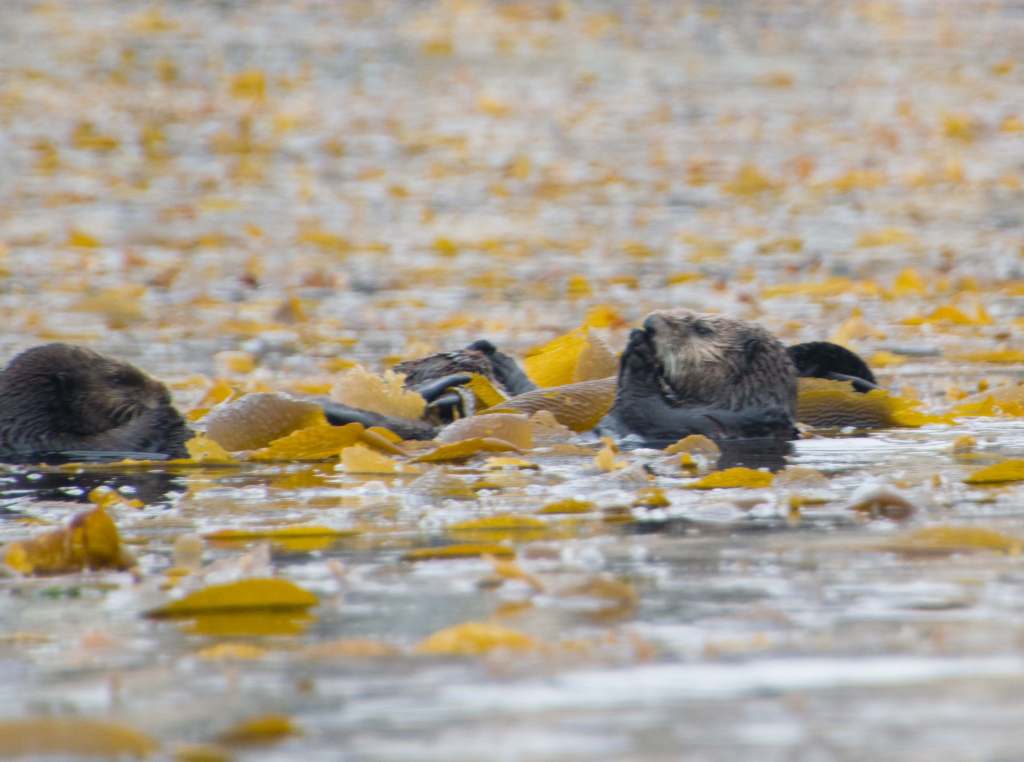

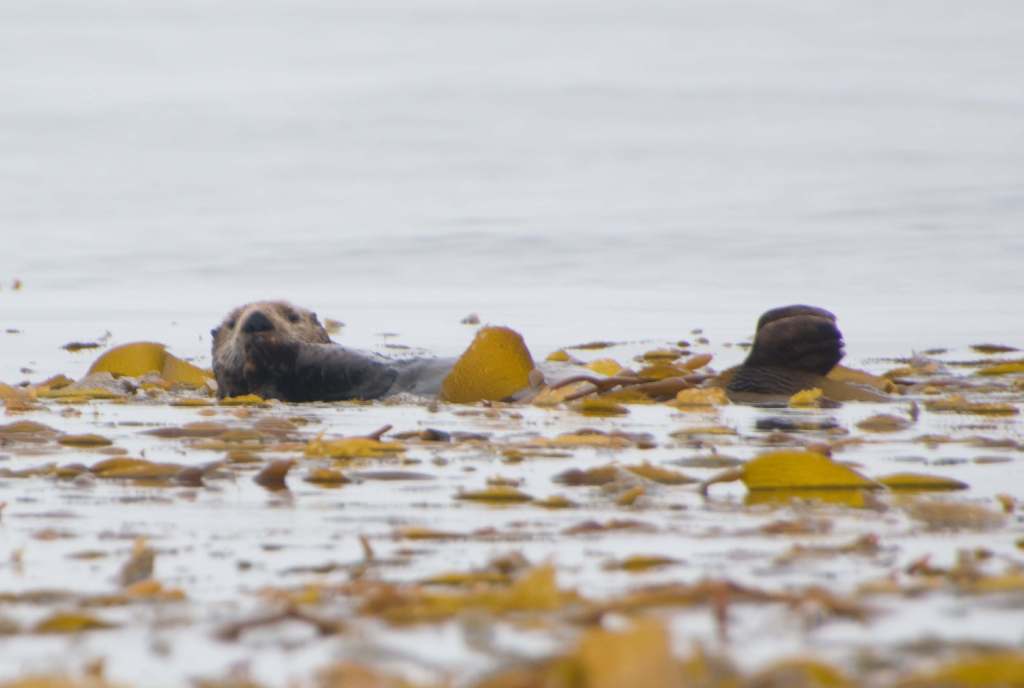
Why were the otters hunted so relentlessly? Their fur. Sea otters have more hairs per square inch than any other mammal — over a million! They are the only sea mammal that doesn’t have blubber, so they need dense fur to keep them warm in the cold Pacific water. When they are not eating or sleeping they are grooming their fur to keep it fluffed full of insulating air.

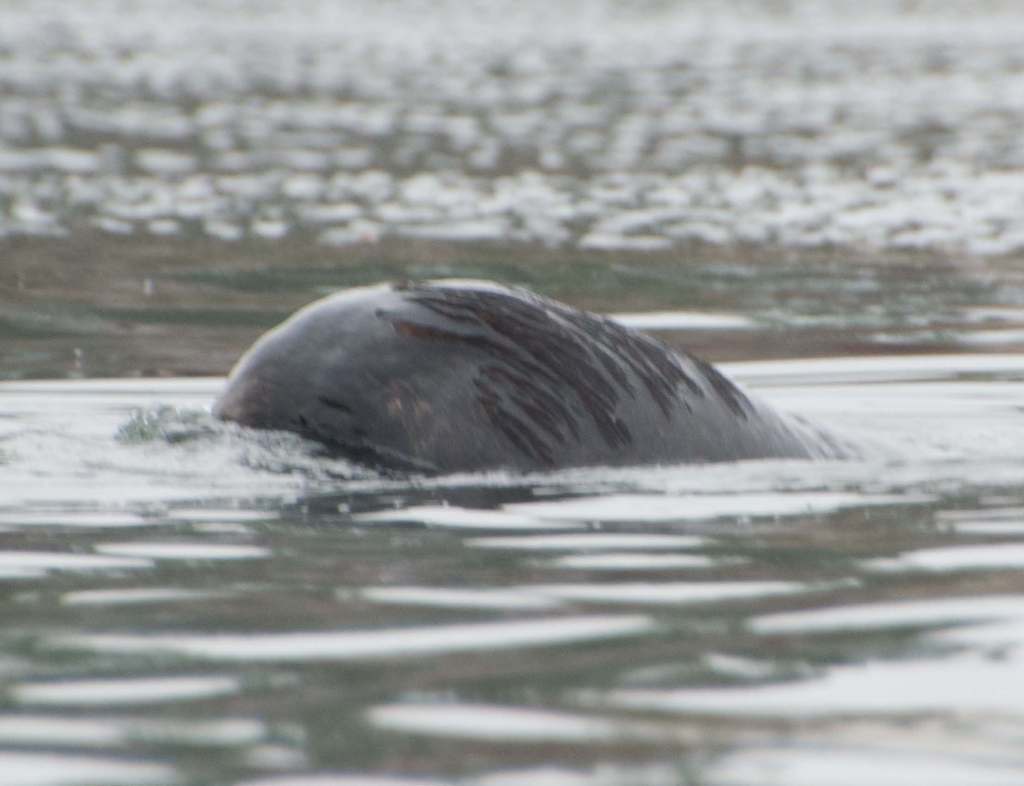
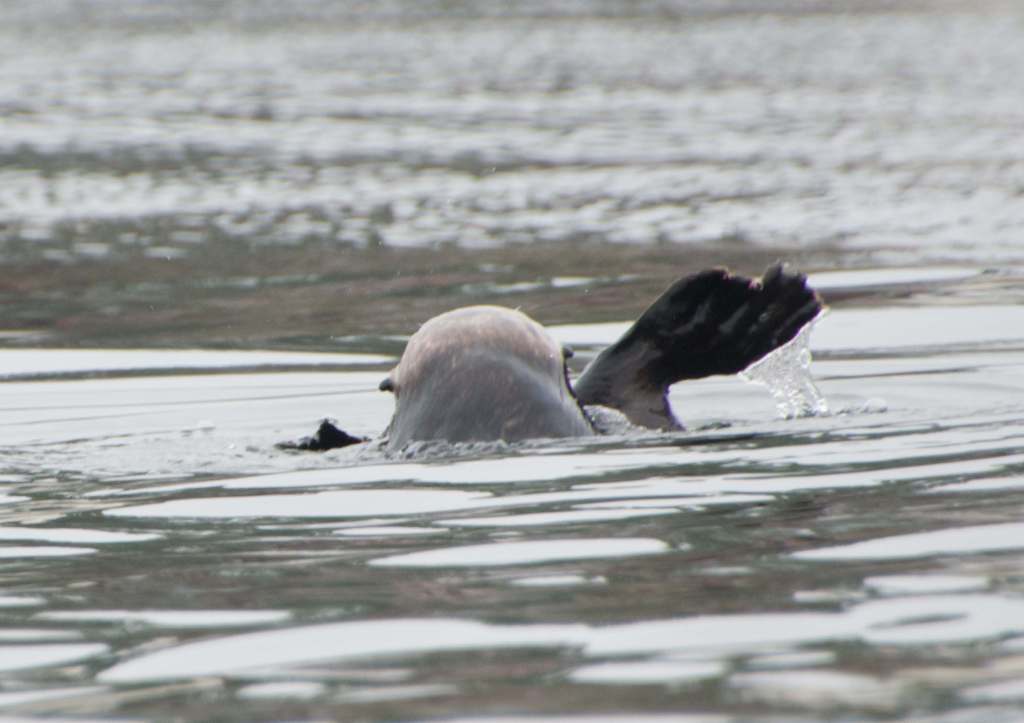


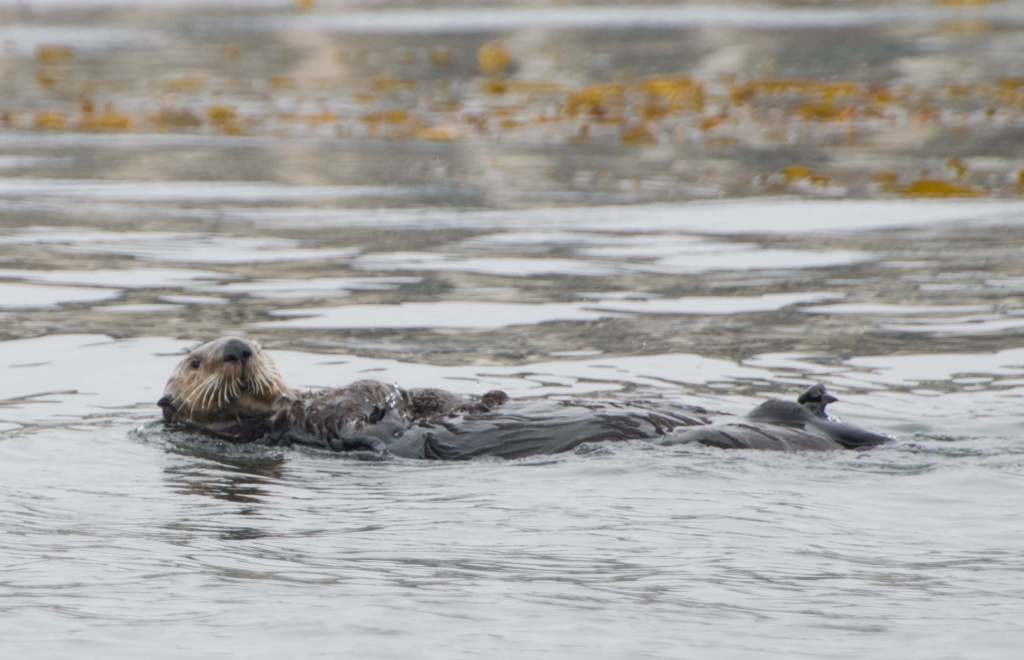
The males bite the females noses when mating, occasionally hard enough to give them a scrape.
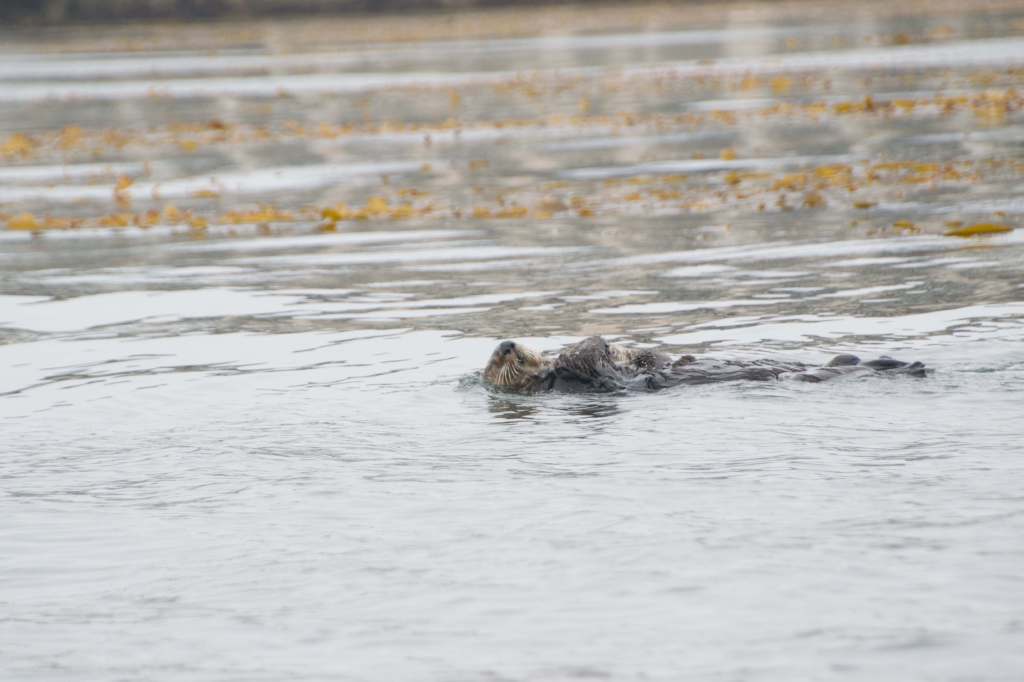
The otters paddle around on their backs a lot. This is to keep their less-insulated paws out of the cold water.

Females have one pup a year. The pups may nurse from six to eight months, up to a year in Alaska. Only about a quarter of the pups survive the first year; having an experience mother increases the survival rate.

Not only does the mother need to groom her own fur, she needs to keep her pup’s fur clean and fluffed, too.
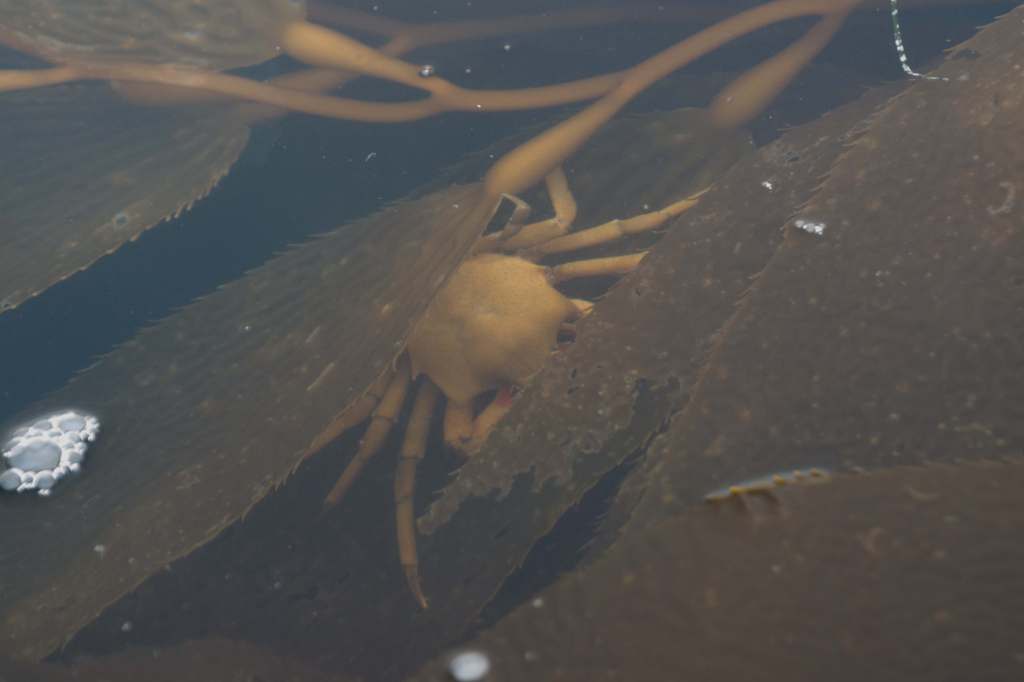
The sea otters eat crabs, abalone, and sea urchins, among other small creatures. When the sea otter populations were so critically low, the sea urchin population exploded. Kelp forests disappeared, eaten by the urchins. This was a problem as the kelp forests provide food and cover for an entire community of sea life. This makes sea otters a “keystone” species for the kelp forest community — without them, the community collapses.
Sea otters are such amazing creatures that I could go on and on about them, but it would be better if you just saw them for yourselves!


 Amy Law, Science Geek
Leave a comment