

Trigger Warning — I show photos of a couple of dead animals in this post, as well as talk about depressing things. If you’d rather not read on, I won’t hold it against you.
This has been such a weird, extreme summer in so many ways — extreme heat over most of the continent, fires in Canada and Hawaii producing smoke, destruction and death. It’s been hard.
Meanwhile we here along the Front Range of Colorado had an extremely cold wet spring and early summer. The cold in Colorado stunted the plants here, and I suspect, animals as well. It just doesn’t seem as if I’ve seen as many insects or birds. Instead, we caught two rats living under our shed — we never have rats. Weird stuff.
Today, my husband and I were out walking the dogs, and we found the biggest wasp either of us had ever seen — we were relived that it was dead.
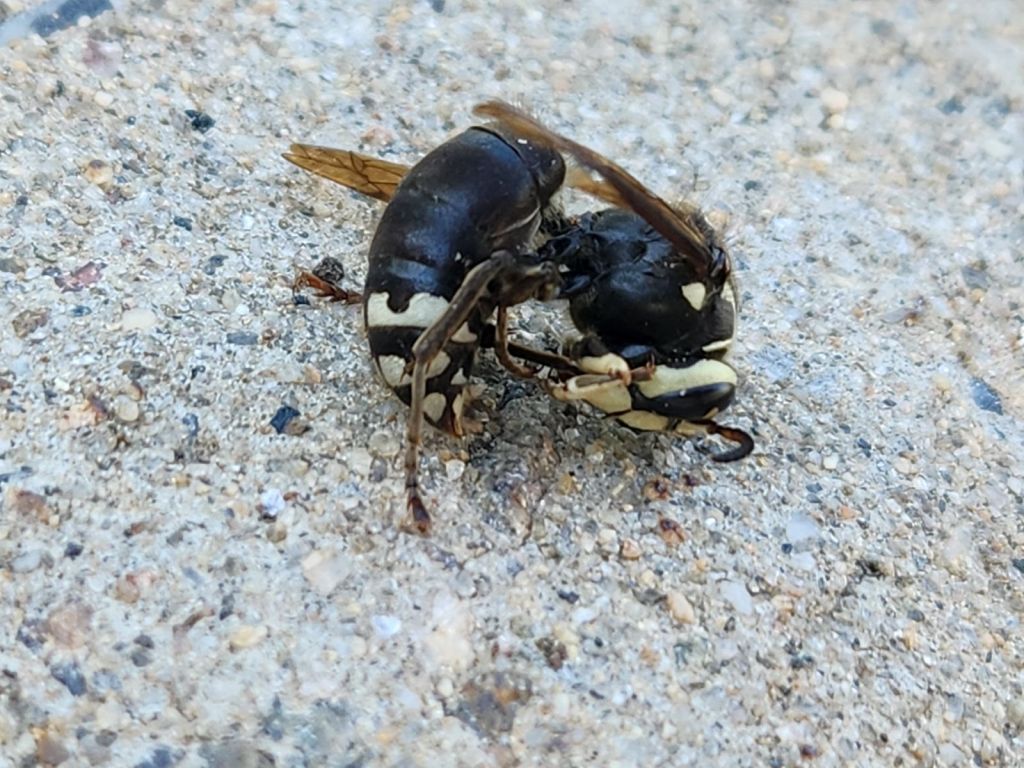
My iNaturalist app declared it to be a bald-faced hornet (but more closely related to yellowjackets). These hornets live in paper hives, like honeybees, and have a similar social structure with a queen, workers and males.

All curled up, this wasp was 1.5 cm, which is bigger than most bumblebees. Stretched out, it probably was almost 2 cm, meaning this is probably a newly-hatched queen that didn’t make it. Worker drones are about 1.4 cm, so definitely smaller.
When I started researching bald-faced hornets, the first websites suggested had titles like “10 Terrifying Reasons to Kill Bald-Faced Hornets!” These were from pest control (exterminator) companies. When I looked at sites like the one from Pennsylvania State University, their response was much more measured. Bald-faced hornets prey on flies and other species of yellowjackets. They try their hardest to ignore humans. If you leave them alone, they will return the favor.
Continuing this post’s theme of death, doom and gloom, two weeks ago on my dog-walk, I found a dead Cooper’s hawk on the sidewalk in front of somebody’s house.
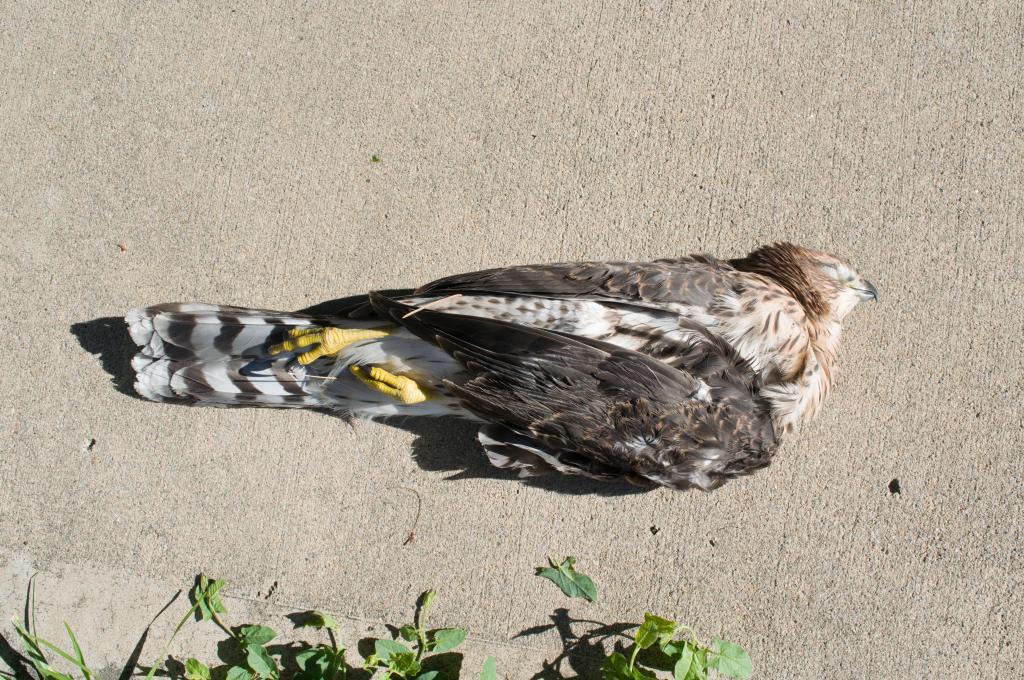
She had only been dead for a very short time when the dogs and I found her. It seemed disrespectful to leave her there — what were the homeowners going to do with her? Toss her in the trash. Besides, I am, to my core, a Citizen Scientist. As soon as the dogs and I got home, I grabbed a trash bag and my car keys and returned to scoop her up.
Now what? Into the freezer while I contact the Denver Museum of Nature and Science to see if they want her. In the meantime, “Honey, that’s not chicken!”
The DMNS quickly agreed to take the bird. They said she was about 1.5-2 years old, and had no obvious problems that would have caused here death. If they can figure out what happened, they’ll let me know. My personal suspicion is that, with a bird that young, it ate a poisoned rodent (remember I said we’d had rats? We did catch and release, but not everybody is willing to transport an angry rat in their car, caged or not), and the residual poison was enough to kill it.
If you have stuck with me through this depressing post, you deserve a reward.

This is a widow skimmer dragonfly I found sleeping in our raspberry patch. They eat mosquitos, which always baffles me, because we don’t have many where we live. Maybe the many dragonflies I see in the evening are the reason why.

Finally, here is a honeybee and a painted lady butterfly momentarily sharing a prairie coneflower. These two kept landing on this flower, then realizing that the other was there, too. I could practically hear them saying “I’m not gonna be here if you’re gonna be here!”
I hope your summer has been better than the places we’ve seen in the news. If it hasn’t, I hope it gets better. Take care.


 Amy Law, Science Geek
Leave a comment