
The last week has been cold and wet here along the Front Range.
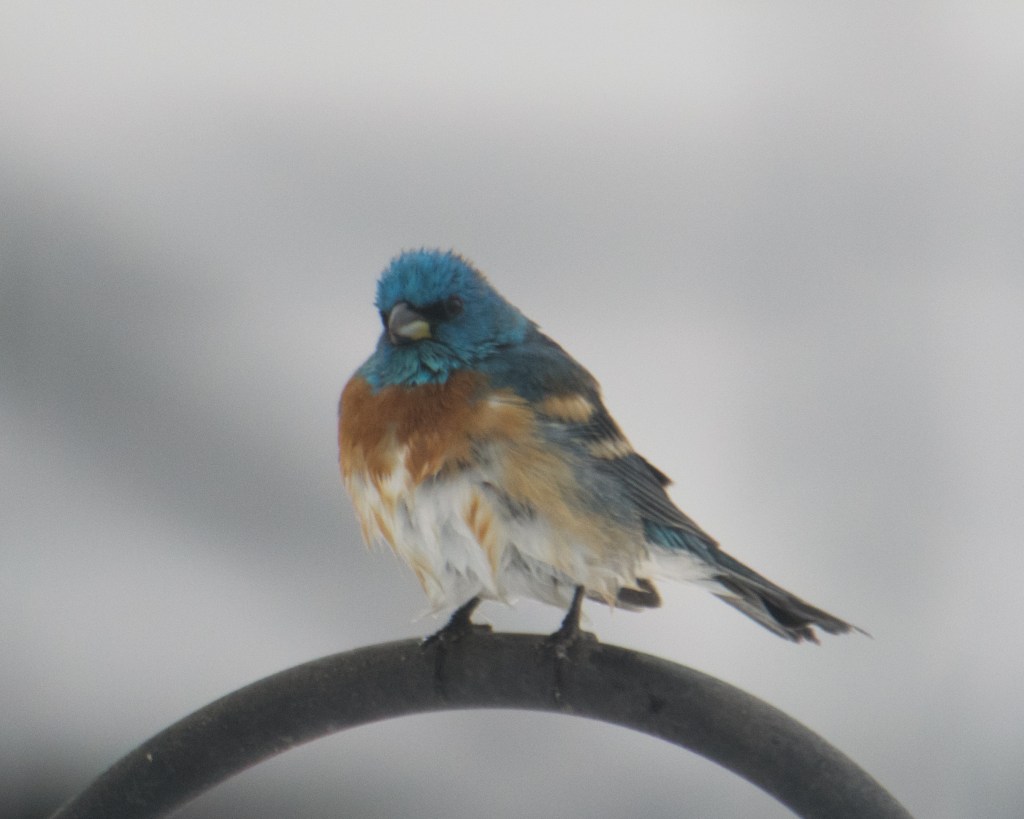
A bedraggled, while still handsome, male lazuli bunting landed on our feeder for a few moments.

Male Bullocks Oriel dropped in, then almost immediately flew on. I usually see these birds in the foothills just west of my house, so he probably didn’t go far.

After the rain stopped a small mixed flock of chipping sparrows and house finches descended on our back yard to feast on dandelion feeds. This handsome chipping sparrow gorged itself while I took photos.
It is interesting that we have seen more chipping sparrows in the past few years than European house sparrows, the introduced species that shares the same niche (and may have pushed it out for a time). In fact, I haven’t seen house sparrows in our back yard in years.

This bird flummoxed me. It looks too big, has stripes too defined, and has too big a beak for me to identify it as a house finch. After some hesitation, that’s what the Merlin app came up with, though. It was part of the flock eating the dandelion seeds. I let them eat as many as they wanted.

This black-headed grosbeak was so focused on eating seeds at our house feeder that it barely took time to check it’s surroundings. As I said, it was a cold wet few days.
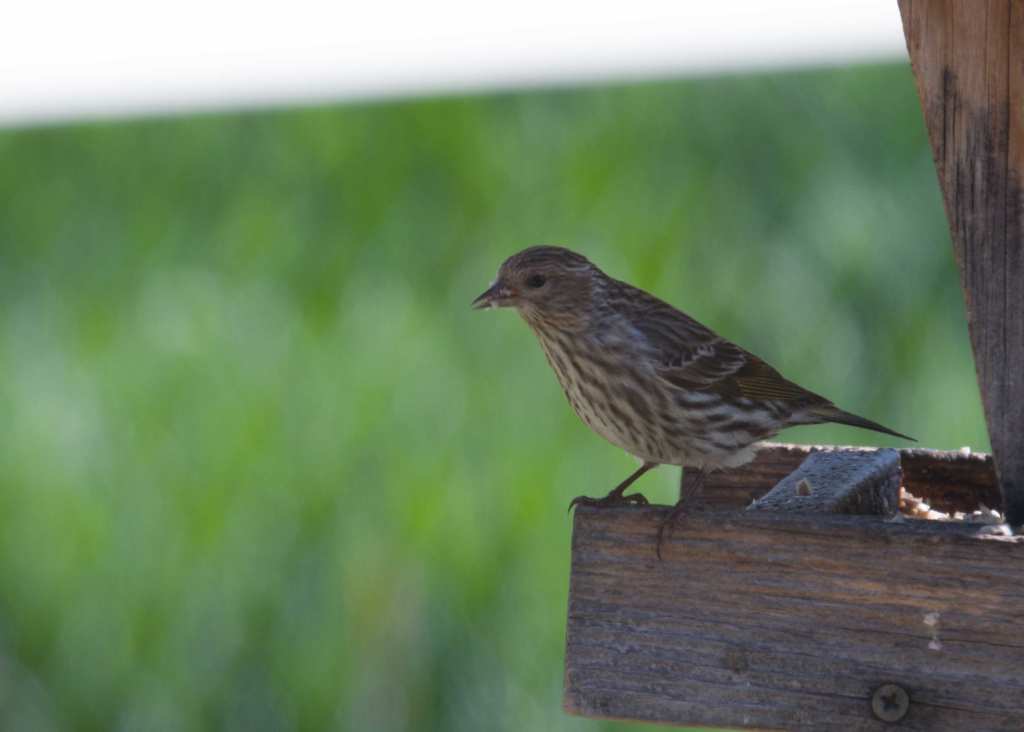
I love the difference in beaks between the black-headed grosbeak, above, and this pine sisken. Both eat seeds and insects, but they evidently go about it in different ways.
One thing that surprised me when I looked up information on all these birds is that they are all found in all sorts of mountainous habitats, but only the pine sisken is found on the plains or other environments.

 Amy Law, Science Geek
Leave a comment