
I remember the day in the 1976 that I ripped open the butcher paper wrapper to the National Geographic Magazine to see the cover of the woman covered in Monarch Butterflies. She had just tracked down where they went every winter, and shared that information with researchers in Canada. For me, that moment represented was all that was wonderful about science — discovery of wonderful new knowledge through dedicated hard work — that then generates more questions. It was one of the events that developed science into a passion for me. Last month, my husband and I had the privileged of journeying to Mexico to see the overwintering Monarchs.

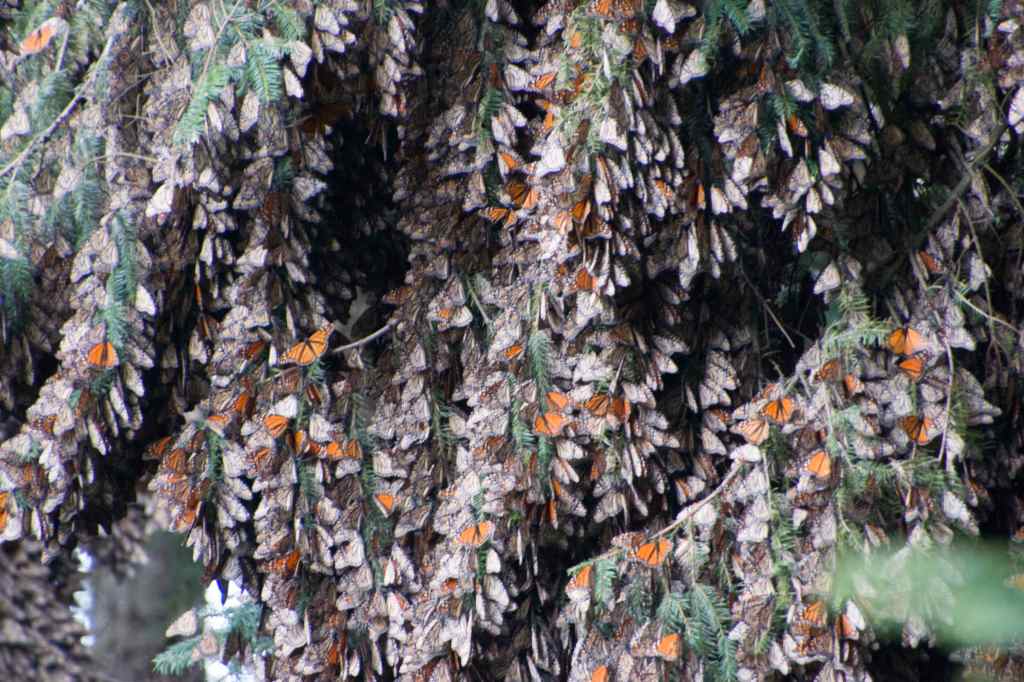
Notice that the branches are sagging under the weight of the butterflies. According to National Geographic each butterfly only weighs 0.0095 to 0.026 ounces.

Look at how scarred the wings are on the upper butterfly. Most butterflies of any species only live a few weeks. These Monarch butterflies started life in the northern US or southern Canada last fall, and flew down to Mexico and are now waiting for spring to start north again.Look at how scarred the wings are on the upper butterfly. Most butterflies of any species only live a few weeks. These Monarch butterflies started life in the northern US or southern Canada last fall, and flew down to Mexico and are now waiting for spring to start north again. That means this generation of butterflies can live up to nine months. They’ll die after they mate and lay their eggs in northern Mexico or Texas.
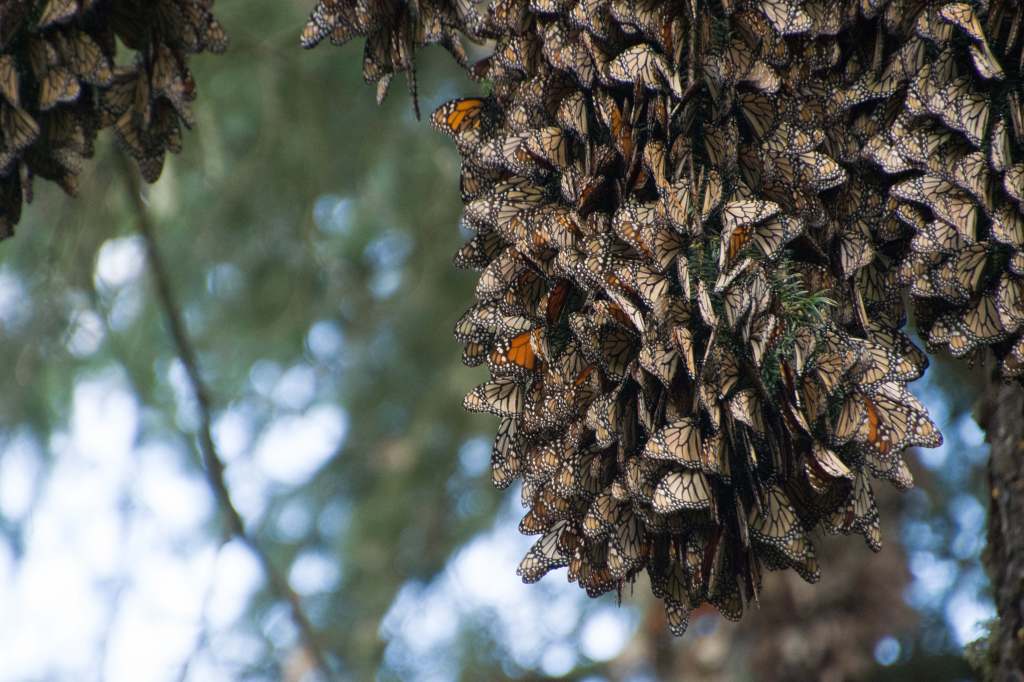
It actually takes several generations for the Monarchs to make it to Canada. The eggs they lay in Texas hatch, grow, turn into butterflies and fly north into the Midwest, where they repeat the cycle. Then again. And maybe again. Going north the generations only live a month or so.
But the generation heading south makes the trip in one generation. And they are flying to a place they have never been before. How do they know where to go? Hide do they find these exact groves? So many more questions …

These butterflies are massed together to stay warm, and conserve energy. They don’t eat while they are in Mexico.
These sites are above 10,000 feet in elevation — it was cool enough to see our breath when we started hiking up. The Monarchs need the cool to slow their metabolism, but if they get too cool, they shiver.

You can see this is a male because of the two black dots on its wings near the end of it’s abdomen. It looks in good shape — undamaged wings and still reasonably plump through it’s torso.

This poor fellow looks like he ran out of energy and starved to death before he could start north and mate.

I think Monarchs drift down into this tangle of shrub branches and can’t figure out how to get out. The ground is inside the tangle is littered with the wings of Monarchs that were then caught by something — probably a mouse — that ate their torsos. Most predators are discouraged by the toxins the Monarchs accumulate by eating milkweed, but black-headed orioles and black-headed grosbeaks, as well as mice, have figured out how to avoid the toxins, and get a meal out of Monarchs.

We weren’t supposed to approach the Monarchs very closely, but this one came up and landed next to me.

The Monarchs spread their wings when the sun hit them, trying to warm up.
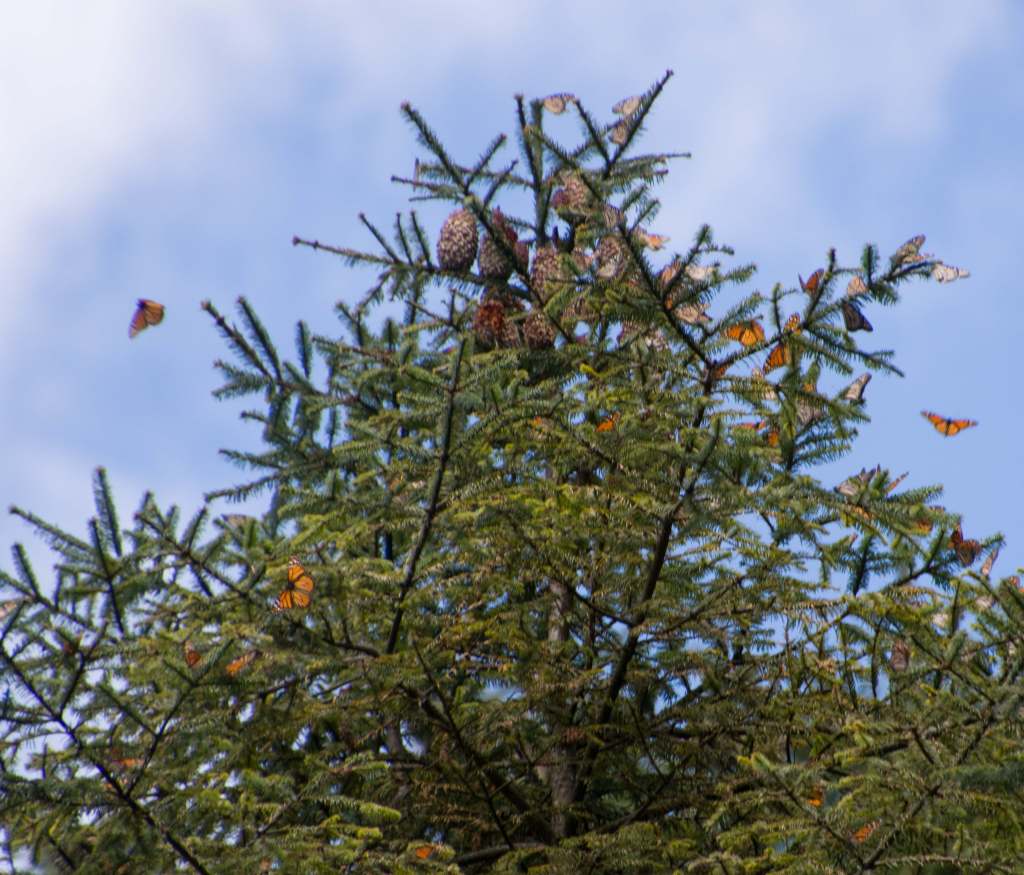
A few began to dance around the tops of the Oyomel firs they roosted in …

… more took flight …

… until suddenly the air exploded in Monarchs launching off the trees.
When the Monarchs came off the trees, it sounded like hard rain falling. (The camera had a hard time focusing because of all the butterflies darting around, but listen to the background static — those are the butterfly wings.)
There has been a lot of talk about how important it is to preserve these incredible overwintering sites from logging and development, and it is. But the number of Monarchs that leave them to head north in the spring is heavily dependent on the number of Monarchs that arrive from the US and Canada in the fall. Between pesticides and herbicides, and development, habitat loss in those two developed countries has been HUGE. Right now, this problem seems to be more of a concern than the twenty or so acres that need protection in Mexico.
To mitigate habitat loss in the United States and Canada, Monarchs need more milkweed on which to lay their eggs — it’s all that their caterpillars eat. And it needs to be native milkweed, because introduced milkweed flowers too long and keeps the Monarchs from migrating. This makes them more susceptible to weather and parasites.
So as you plan your gardens this spring, consider leaving a little corner for native milkweed.


 Amy Law, Science Geek
Leave a comment