
With the leaf canopy of the big trees fill in and the baby Great Horned Owls fledged, my husband and I decided to take a hike in the foothills west of our house. This hike took us through the Mountain Shrub plant community — the boundary between the High Plains and the Ponderosa Pine plant communites. It’s often overlooked because it doesn’t have sweeping vistas of the plains or the towering trees of the forests. But it usually has a greater diversity of plants and animals than either of the other two.

A lovely narrow-leaved penstemon was one of the first plants we saw.

Just a little further on, we saw this awesome plant in the sunflower family. I was so excited by it that I told my husband “This would look great in our native xeriscape garden!” When I looked it up on Plantnet, it said it was Nodding Brighteyes from someplace not on this continent. So I’d have to make an exception to my native plant motif, but of more concern, it has escaped cultivation and has the potential to become a problem plant. Sigh.
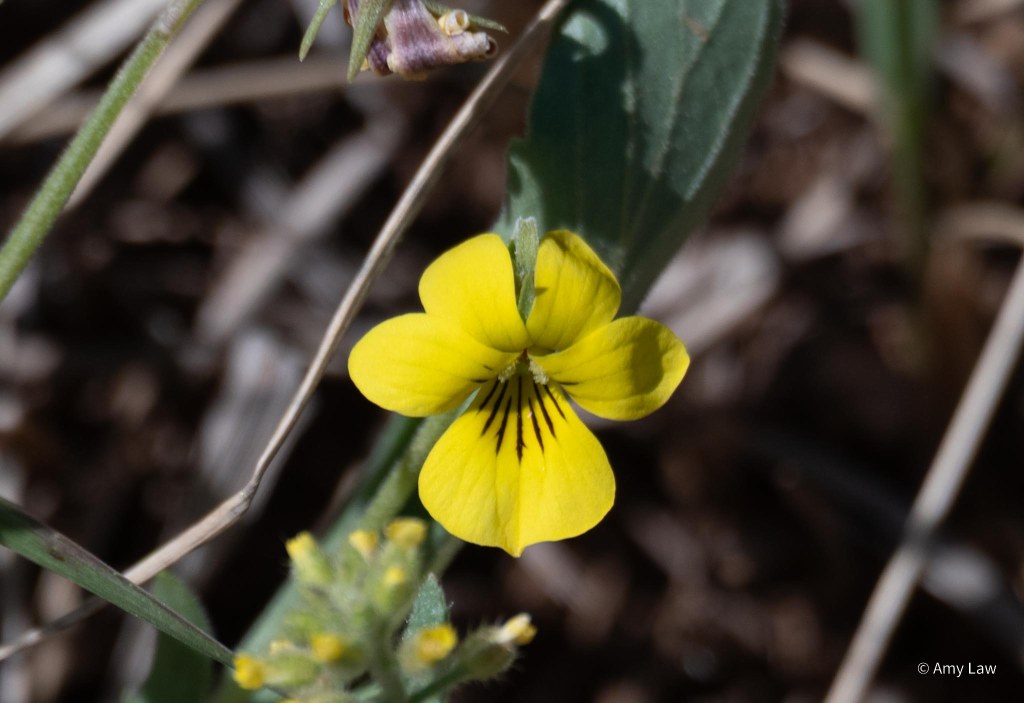
Okay, to make up for it, we next saw a small plucky Nutall’s violet, worthy of any flower garden. Not a shrinking violet at all, this plant with the bright yellow flower survives in hot sun and dry soil. My kind of plant.

Just as we started up the trail, the wind picked up. It made getting a shot of this very shy lazuli bunting even harder. Sorry for the blur, but he was so colorful, I had to include him.

Gorgeous sand lilies were on along the trail going up and back. I always feel like it should be Easter when I see these little gems.
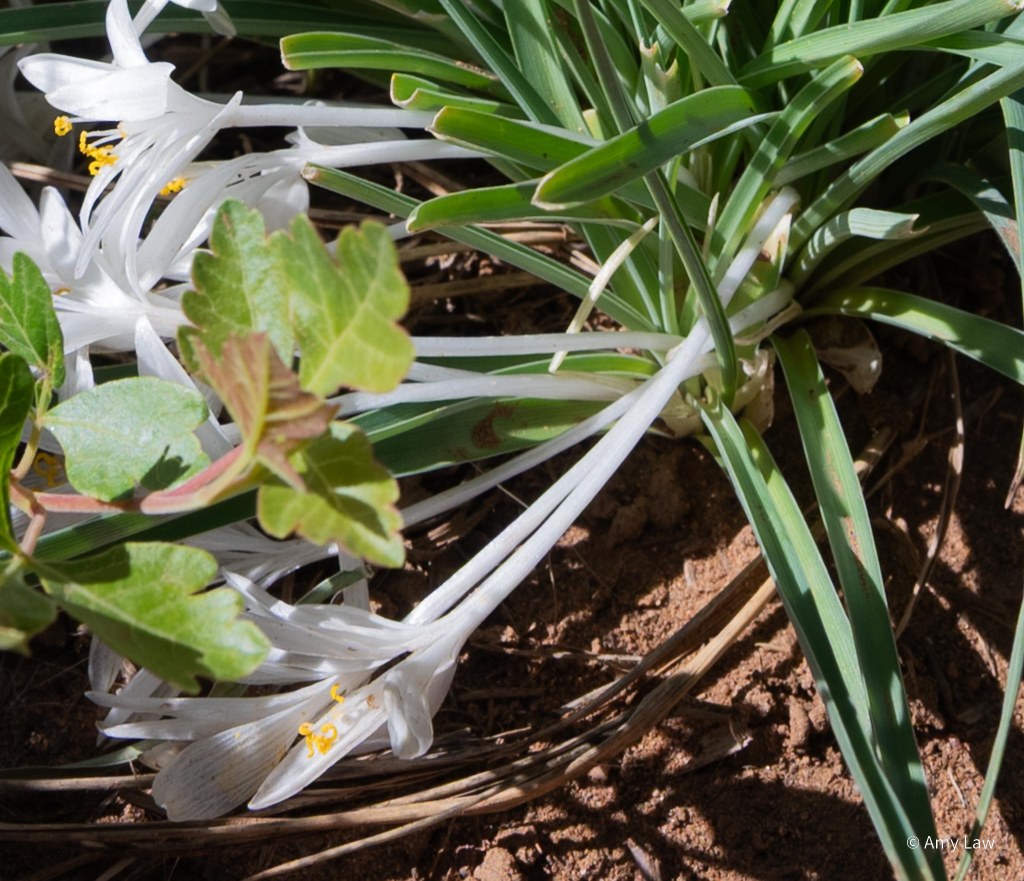
I love how long the calyx tube is, running from the showy flower parts down four inches or so to where the seeds are made at the base of the plant.
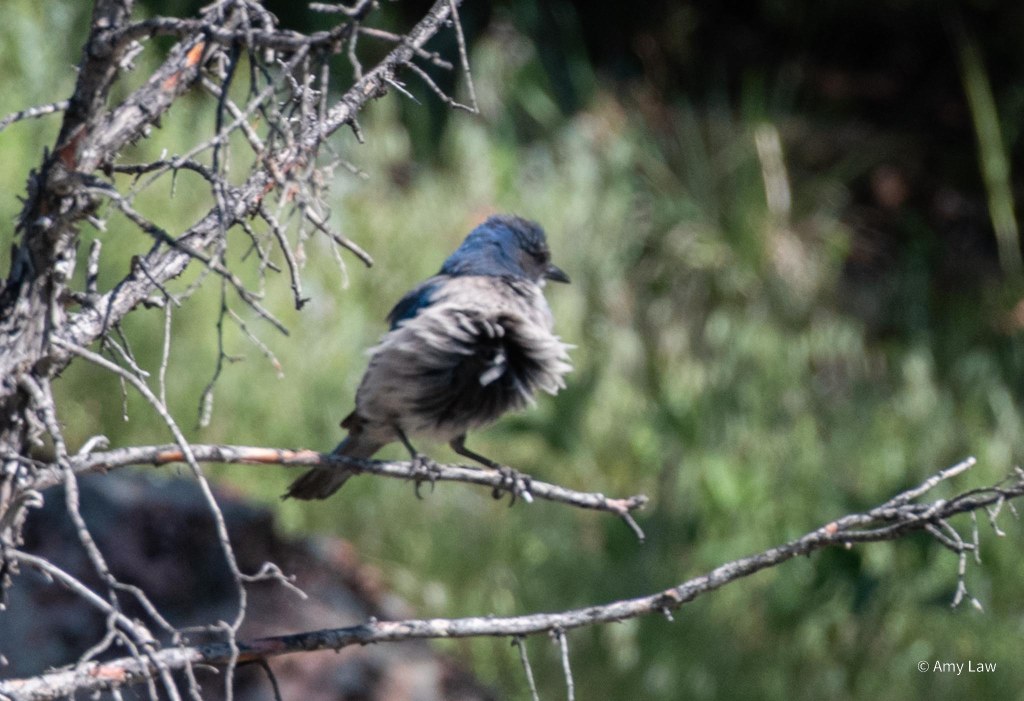
Did I mention it got windy? I’ve never seen a bird’s feathers blow back like they did on this Scrub Jay.
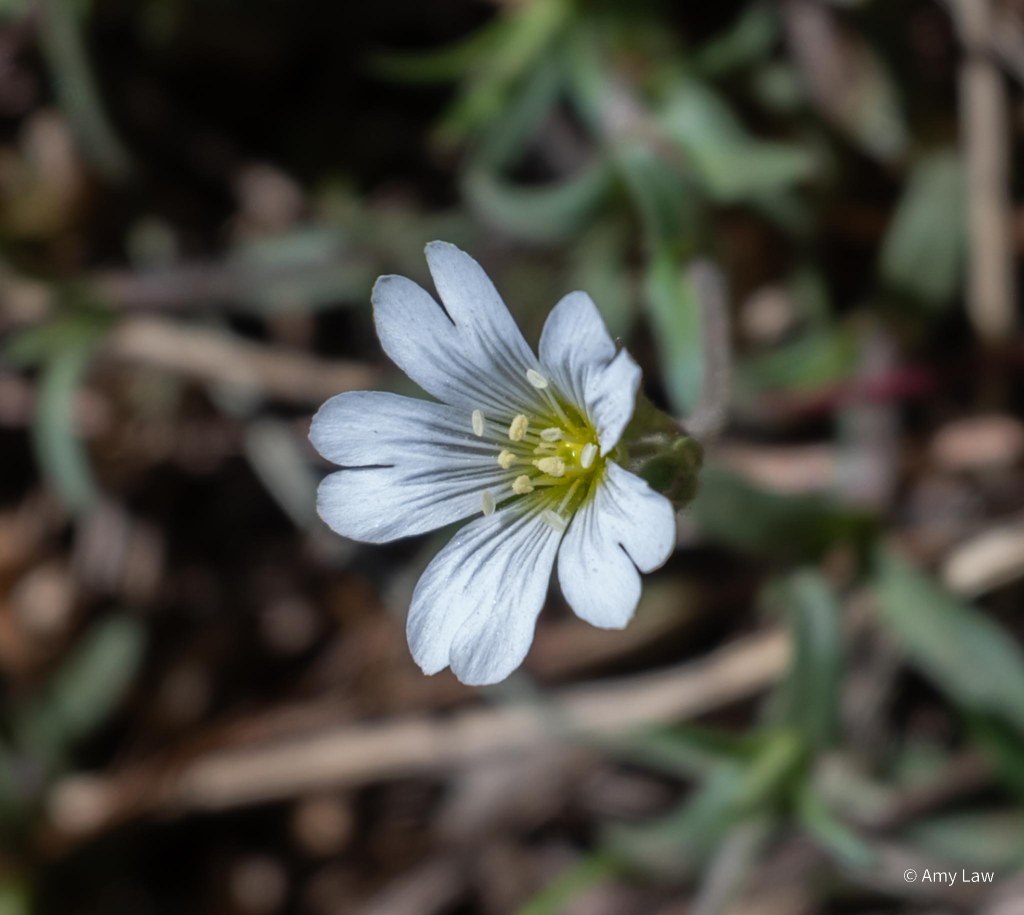
A charmingly-named mouse-earred chickweed. To my great surprise, it is in the carnation family! Another one I could add to my native garden…
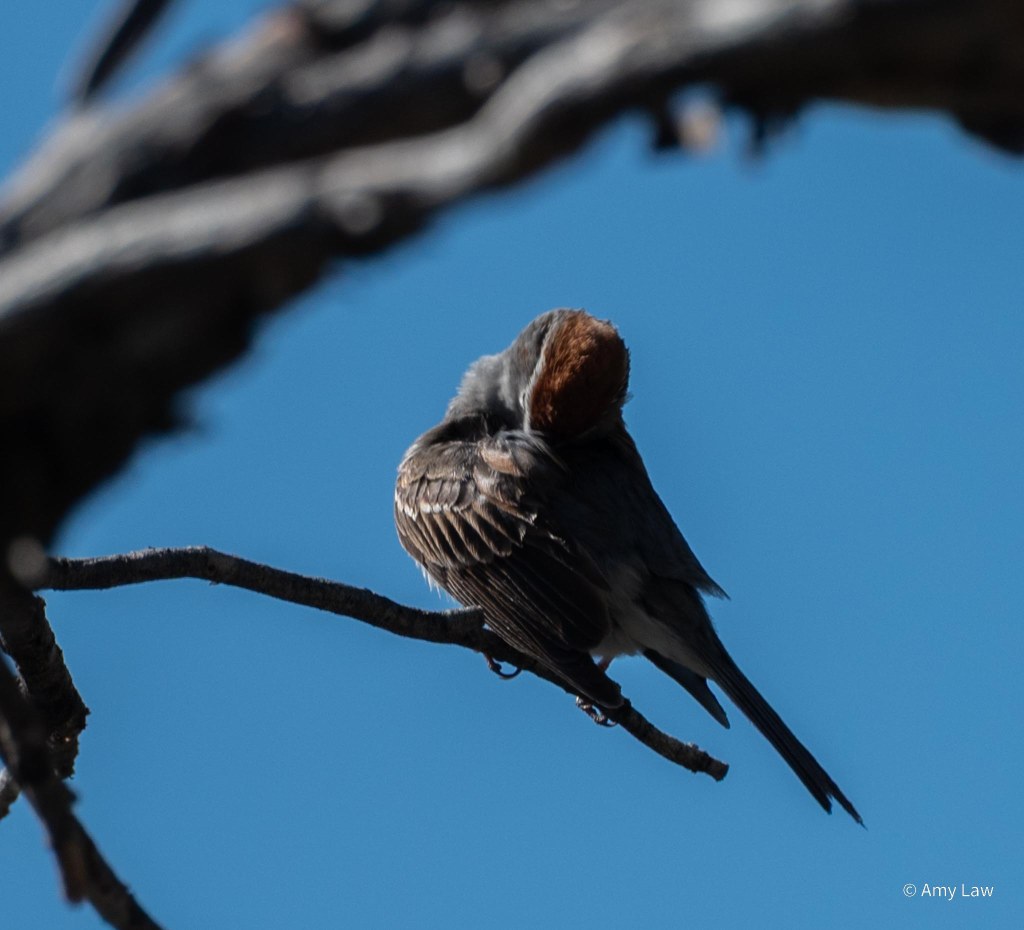
A chipping sparrow had its feathers ruffled by gusts of wind and is preening them all back into place…
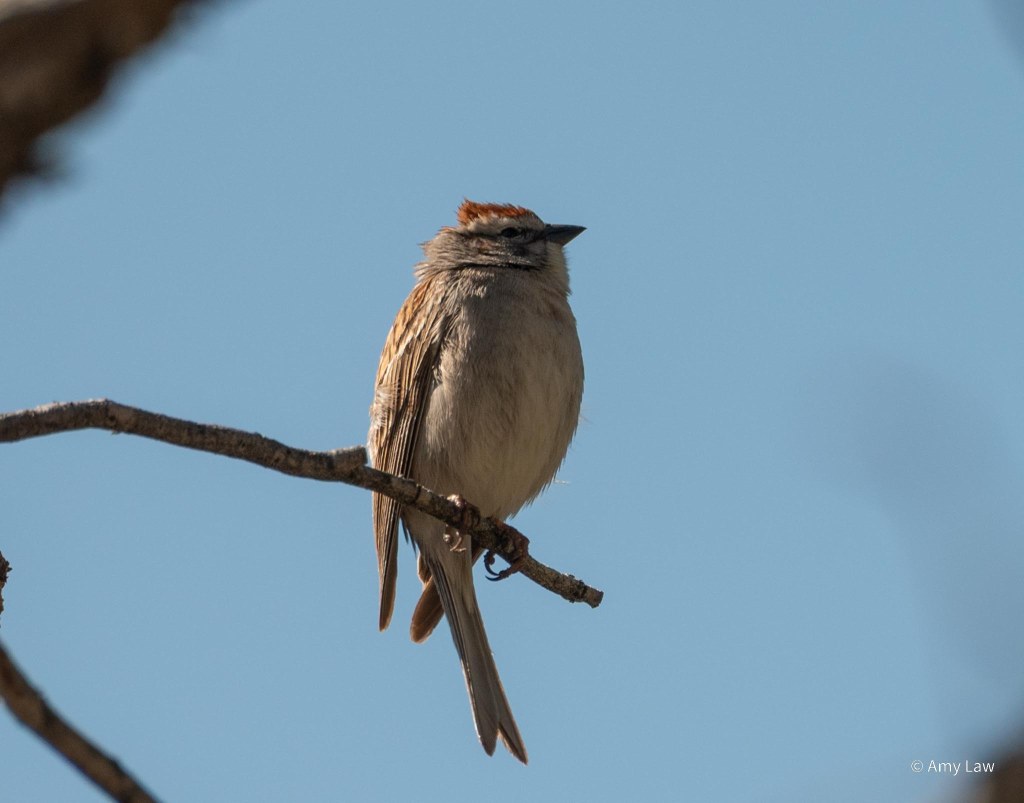
… only to have them mussed up again.

Normally when we hike through the Mountain Shrub community, we see lots of butterflies. Today, this was the only one, and it seemed like it was clinging to the plant stem for dear life. Did the wind ground them? Very possibly.
I have never seen a butterfly like this before, so I ran it through iNaturalist. The answer came back that it was “a butterfly”. Um, thanks?
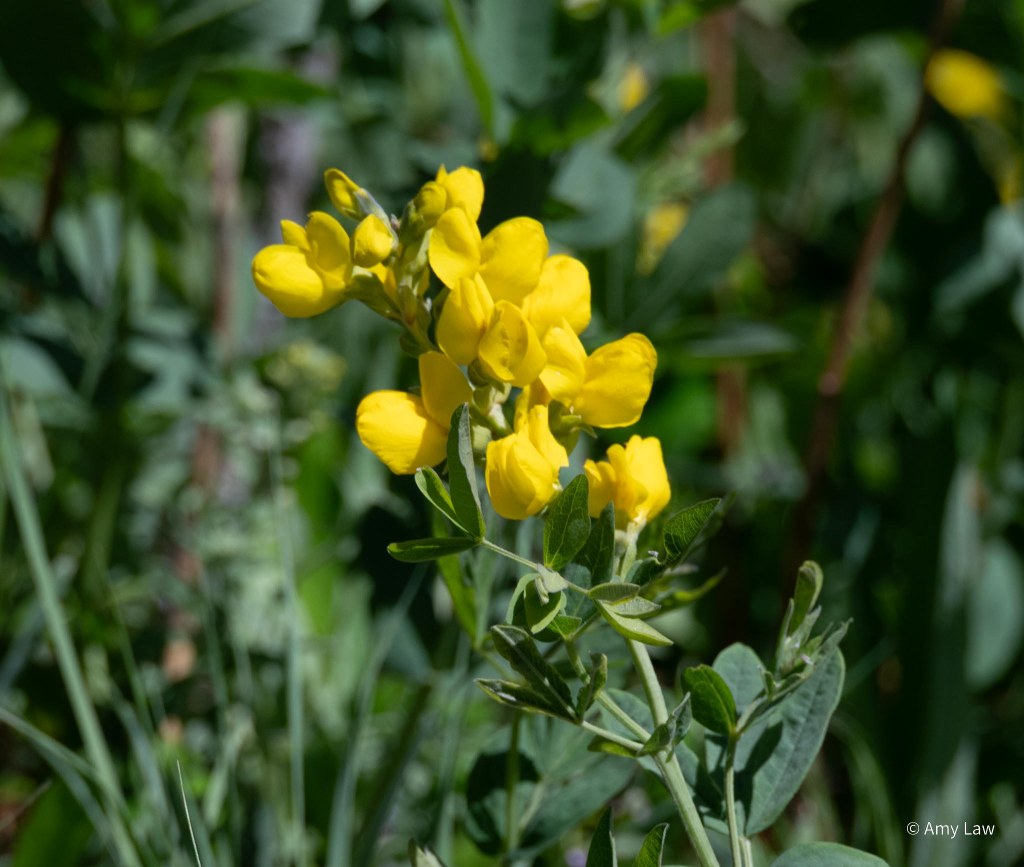
Golden banner, in the pea family. DO have this one in my native xeriscape garden. Love it.

After two and a half hours of walking in the wind and sun, we were on the downhill stretch — literally. But I kept hearing a buzzing chirp that I couldn’t identify, so made my husband stop and stare intently at the shrub where the sound was coming from. After several minutes, I began to see something flit and buzz-chirp in it. It finally popped onto a twig where I could photograph it (sorry for the blur — windy, you know). But I couldn’t identify it. So I ran it through Cornell’s Merlin app (how did we identify ANYTHING before cell phone apps?) and it said it was a Blue-gray gnatcatcher.
I have never heard of a Blue-gray gnatcatcher before, and had no idea Colorado had gnatcatchers. Or that anybody had gnatcatchers. So here’s one for my life list! Yay!


 Amy Law, Science Geek
Leave a comment