
Usually at this time of year, I am inflicting my passion for the Pika Project (https://pikapartners.org/) on you. And I’m going to in this post. But for the first time ever, we only got to go to one site, and then, we only saw one pika. Phooey!
Before you ask, I think the lack of pika at our first site was simply luck of the draw. We went up earlier than we every have before, and I think they were just lazing in their burrows, avoiding the 70o day. And we had to cancel going up to the second site due to heavy rains on Tuesday, because if you think I’m going to be scrambling around on sharp, unstable schist rocks when they are wet to boot, guess again.
And because we went up earlier than ever before, we got to see more flowers. Yay!
The hike was as challenging as ever, but no more so than usual, which was a Good Thing. As I age, I’ve taken to using this hike as my own personal canary in the coal mine. There will come a day when I can’t do it anymore. Today was not that day.
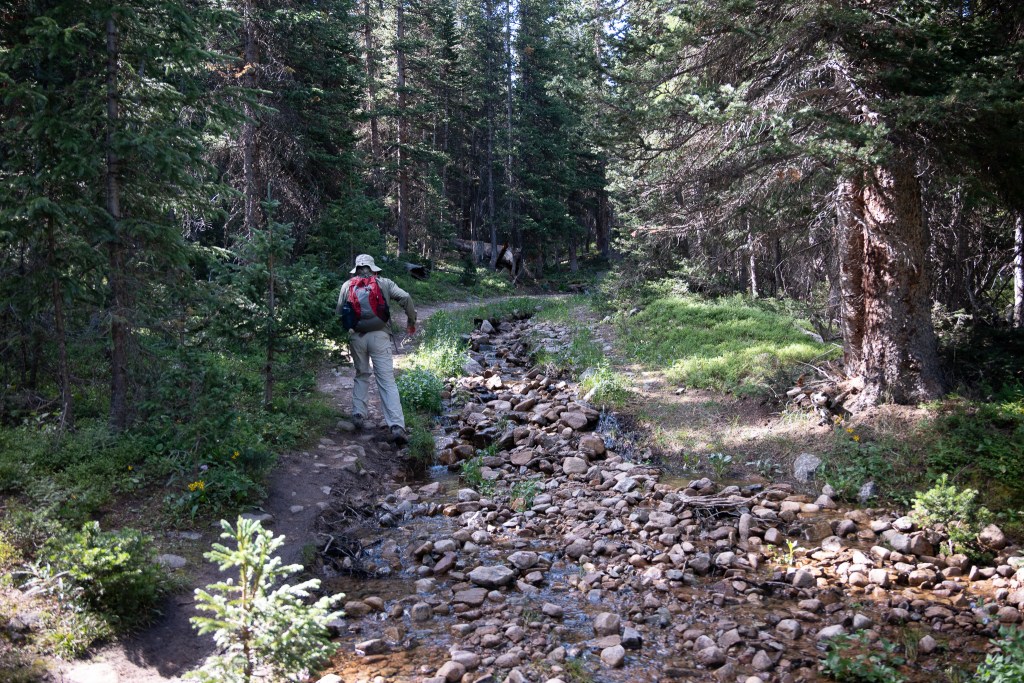
My husband hiking through a lovely spruce-fir forest.
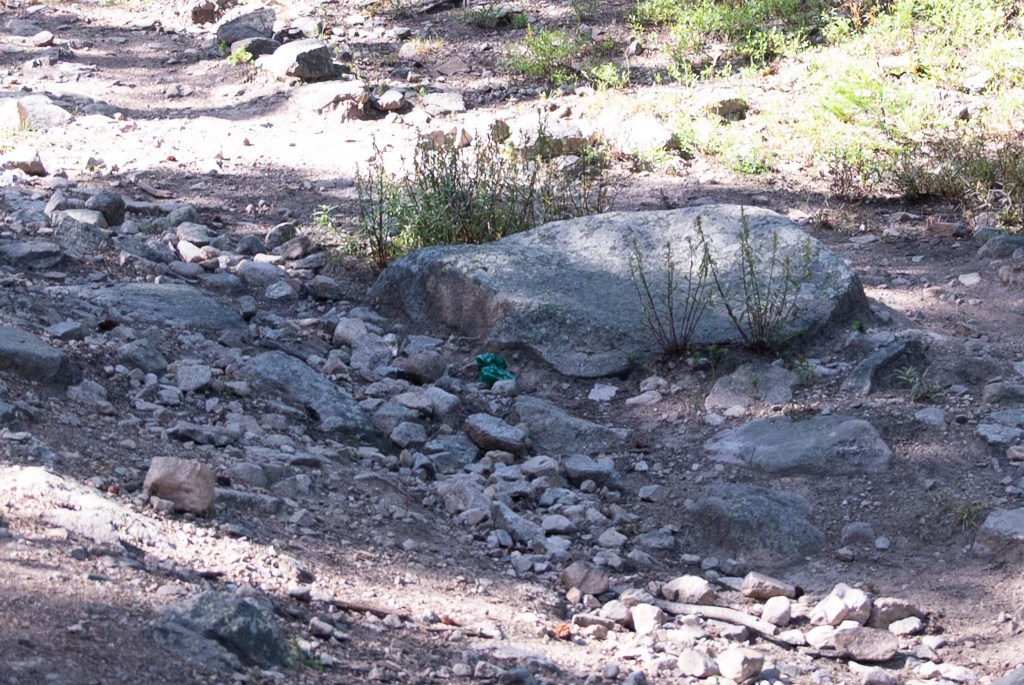
In the center of the photo, just below the big rock, is a poop bag. This was not the first poop bag we saw on this hike. In fact, we see them on most hikes. To which I say “what”? Great that you have bagged your dog’s poop. Now pack it out. I do not understand this mentality of wrapping it up and … leaving it.
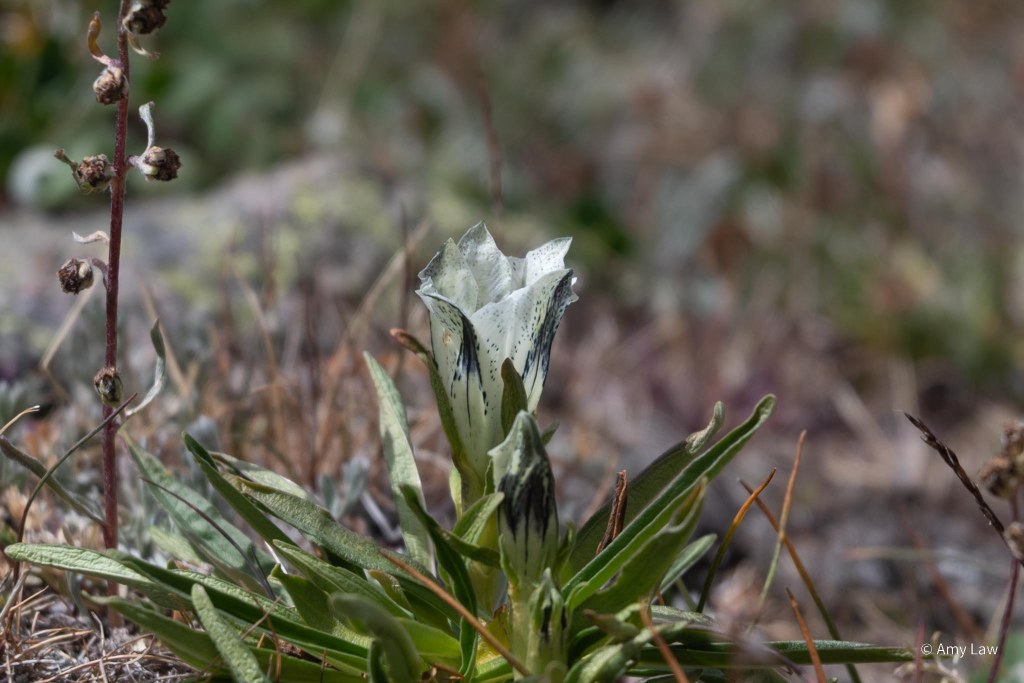
As I said above, one of the reasons we went up early was because that by the time we usually go up in late September, all the flowers are done, and dried up, leaving only the seed heads for the pika to eat. But by going up a month and a half earlier, we were rewarded lots of flowers. Above is Alpine gentian.
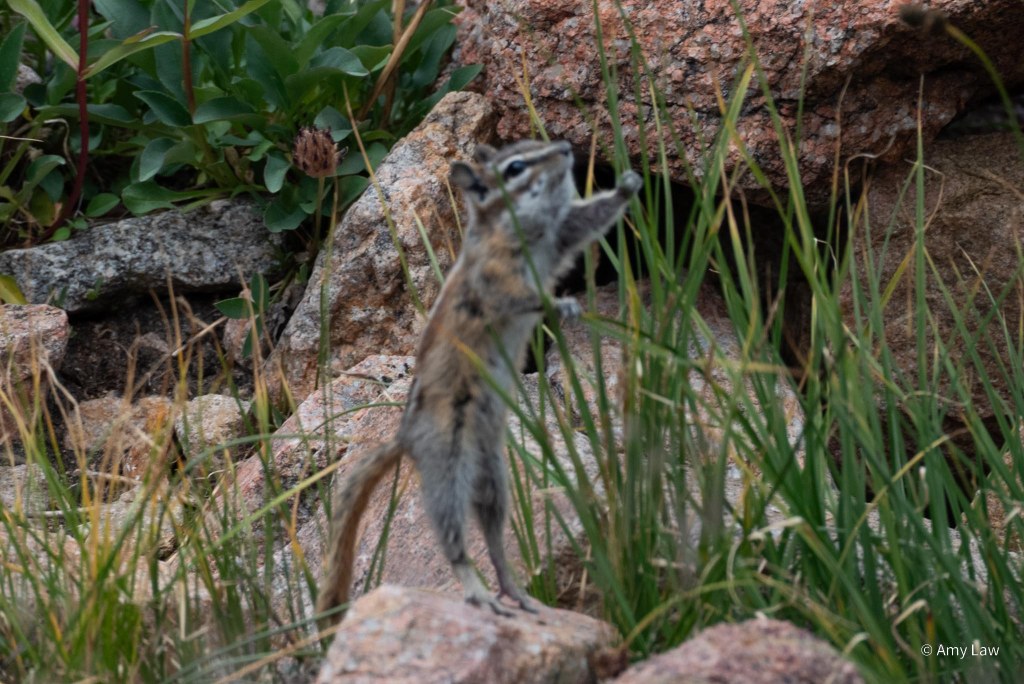
My husband spotted this chipmunk stretching to reach a seed head. I included this shot in spite of its fuzziness because I’d never seen a chipmunk reach like this before.
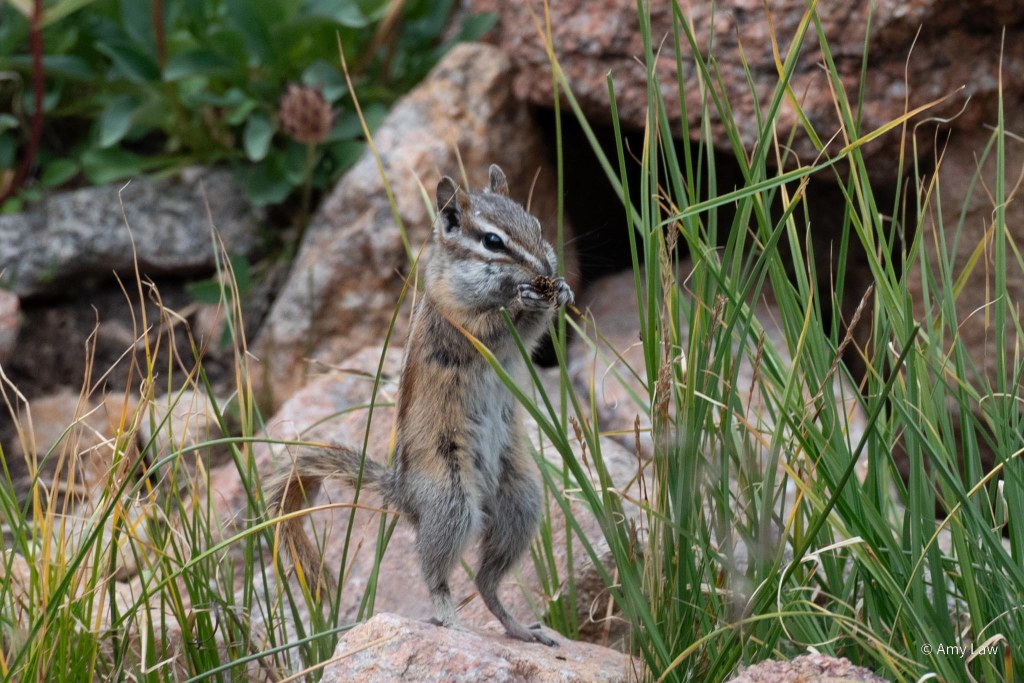
Or seen it stand on it’s hind legs to eat it’s bounty.
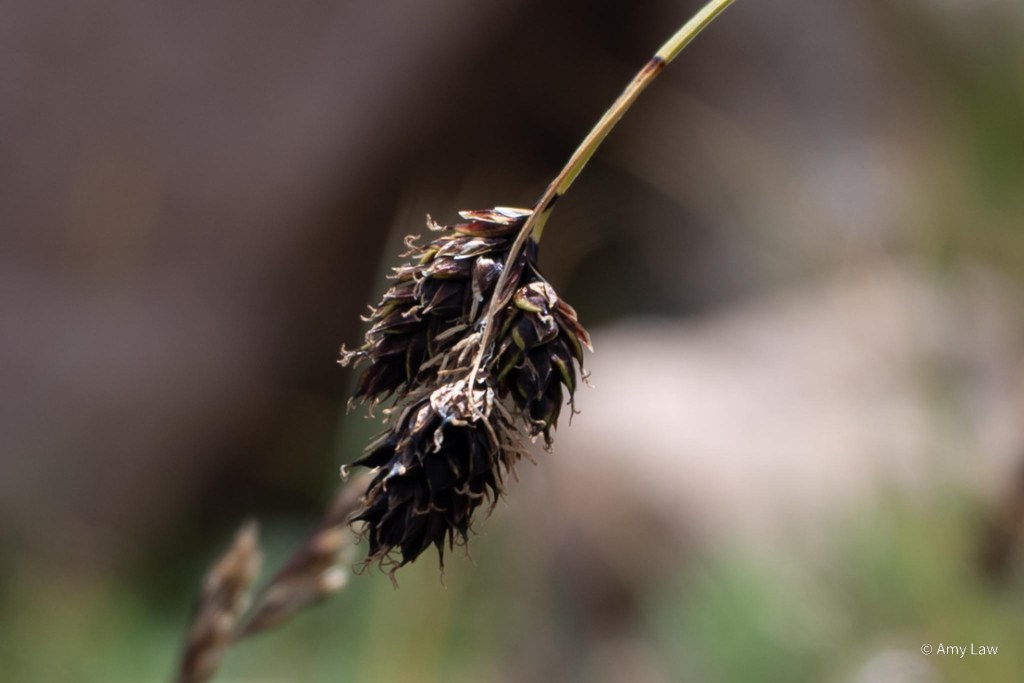
It was eating the seed head of a grass-like sedge, chock full of nutrients and calories.
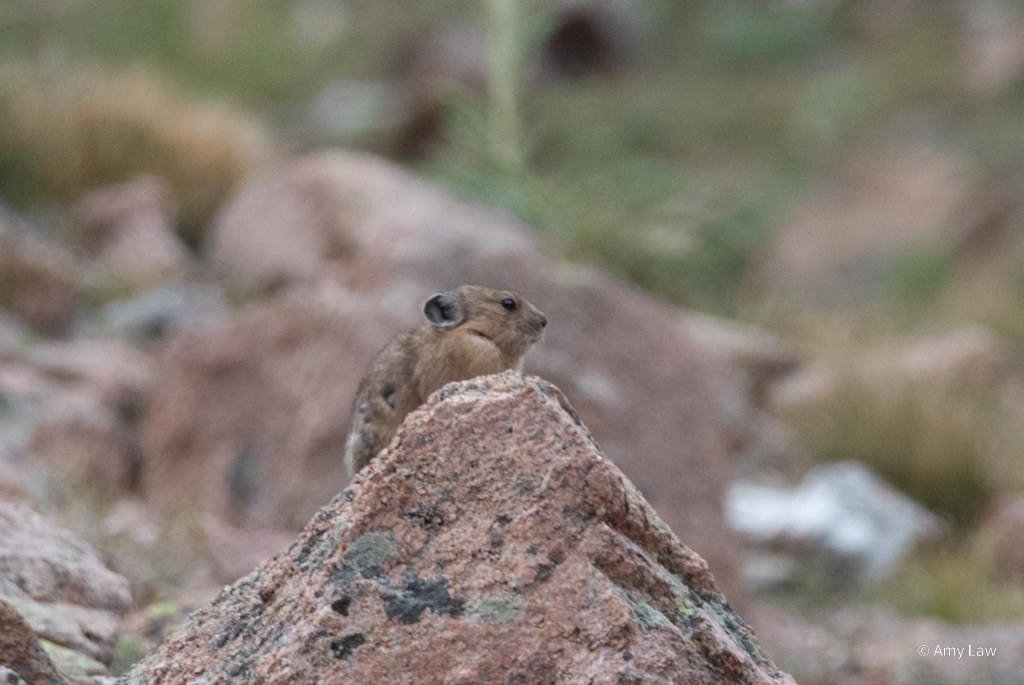
My single pika photograph (If you want more, check out this post from last year: https://amylawscigeek.com/2024/09/02/2024-pika-patrol/). Then it was gone. We kept hearing them make their squeeky-ball calls, though.

A Boisduval Blue butterfly on an alpine daisy. Most plants in the tundra have huge flowers for their size to maximize their ability to attract insects during the short growing season.
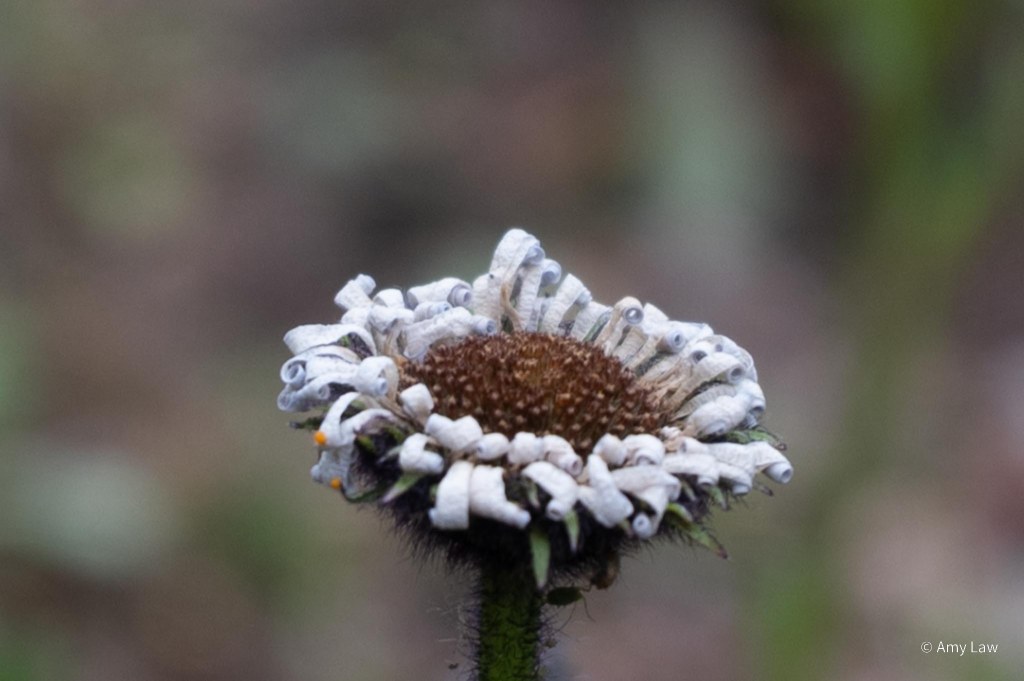
Alpine-Arctic fleabane. I’d never seen this plant before, but I love how tightly it’s petals curl on themselves.
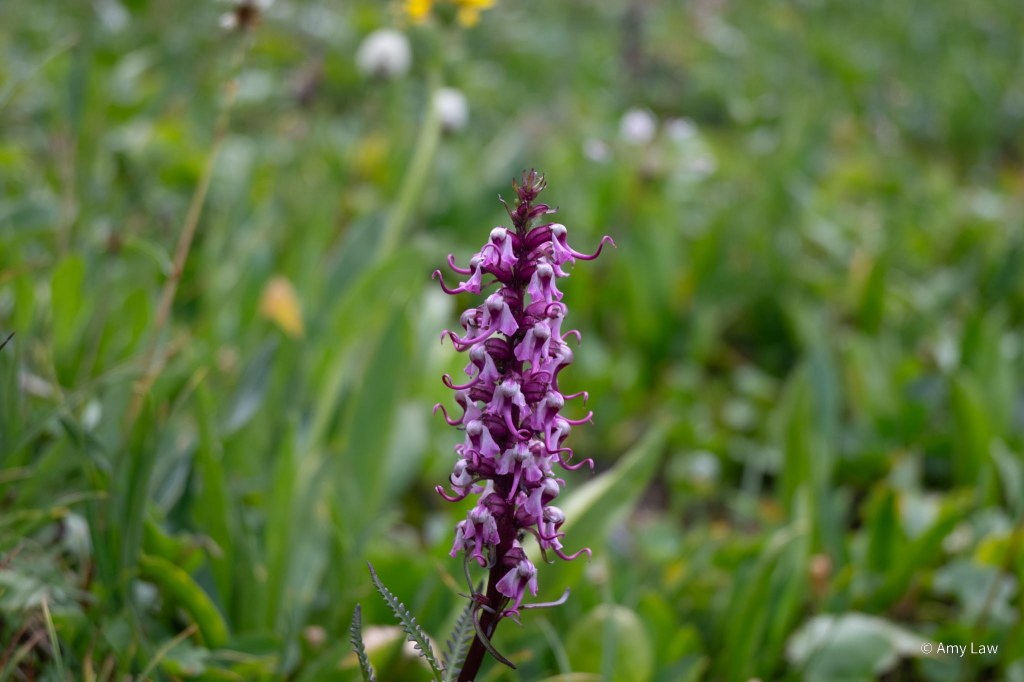
As we were leaving the site, we passed through a boggy area. As I was carefully watching where I put my feet, I saw this charming little plant. It goes by a bunch of different names, all some variation “Pink elephants” — each pink flower looks like an elephant’s head, complete with big floppy ears and a twisting trunk.
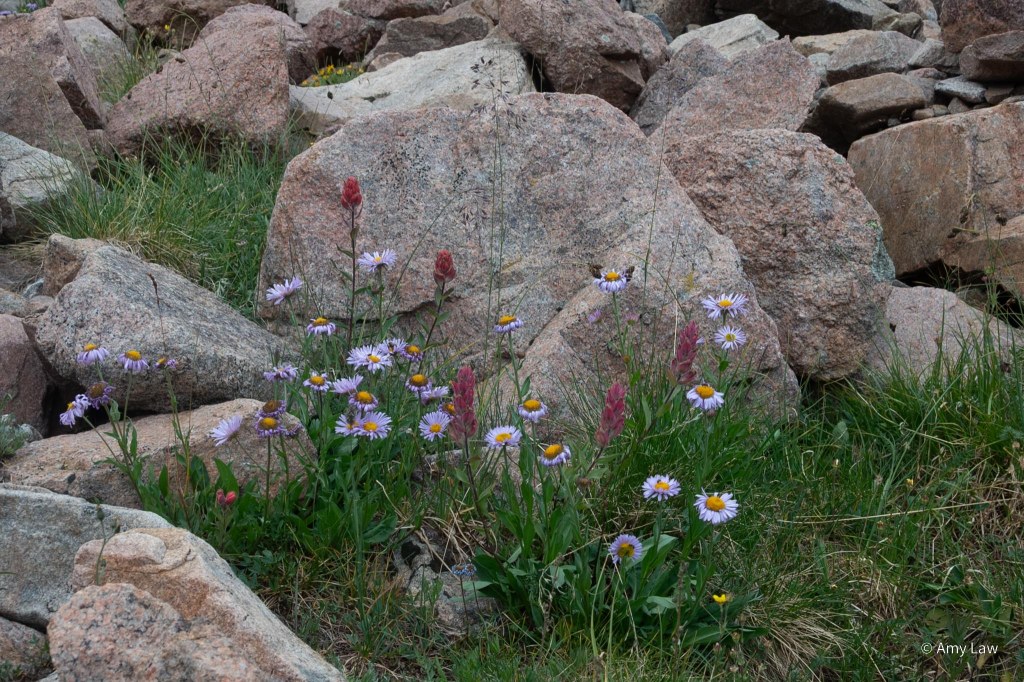
My husband called this my “John Fielder photo” after the late, great photographer of Colorado nature. A good shot on which to sign off for today.


 Amy Law, Science Geek
Leave a reply to Amy Law Cancel reply